Entertainment
Remembering Asha Bhosle and the Career That Defined Generations of Indian Music
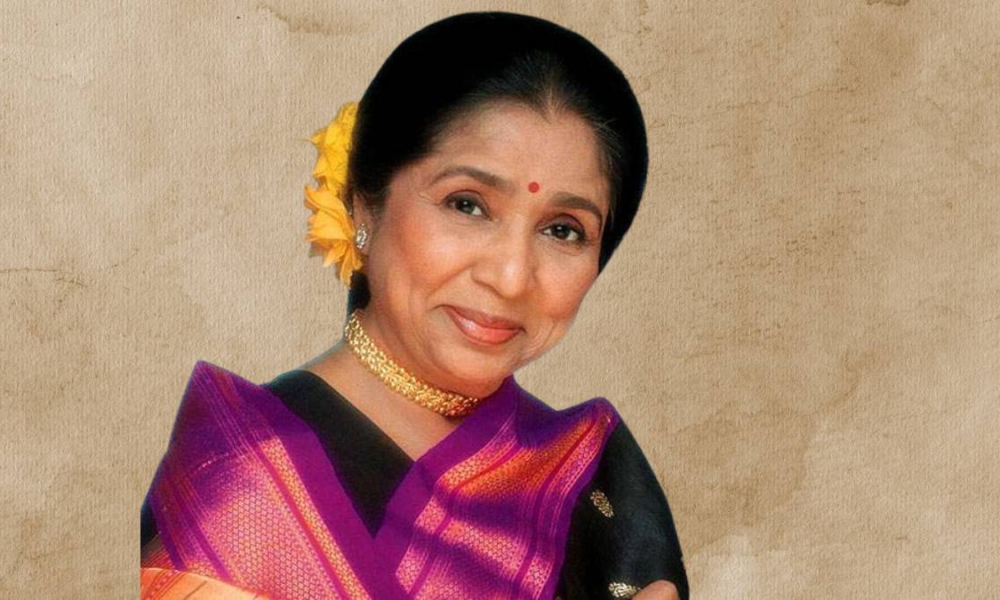
Asha Bhosle spent 80 years in Indian music and managed to stay relevant through every single shift it went through. That is the part of her story that does not get talked about enough.
Asha Bhosle passed away this morning in Mumbai. She was 92. And if you grew up in India, or in any household where Hindi music played, you already know what that means without us having to explain it. She recorded over 12,000 songs across 20 languages. She held a Guinness World Record. She won two National Awards for two completely different styles of singing, six years apart. She debuted as an actress at 79 and got critical acclaim for it. She was still performing on international stages at 80.
Most people will spend today sharing their favourite song of hers. That is the right thing to do. But it is also worth taking a minute to actually look at how she built all of this, because the career itself is a story that does not get told enough. The word “legend” gets thrown around so casually that it has lost all its weight. In Asha ji’s case, the facts alone do the talking. No adjectives needed.
She started singing to feed her family. At age 9.
She recorded her first chorus song, “Chala Chala Nav Bala,” for the Marathi film Maze Baal in 1943, at the age of 10. Her father, Pandit Deenanath Mangeshkar, had died a year before that. The family had moved to Bombay. There was no plan B. So Asha and her sister Lata walked into studios and sang. Not as a hobby or a dream. As survival. That is where this entire story begins.


She was handed the songs nobody else wanted. And she turned them into classics.
In 1949, at just 16, Asha Bhosle eloped with Ganpatrao Bhosle, who was 31 at the time and worked as the personal secretary to her elder sister, Lata Mangeshkar. After she was cast out by her family, she was handed assignments that others refused, usually singing for the vamps in B and C grade movies. The industry had already decided she was second. She was Lata’s rebellious younger sister, the one who made a mistake. So they gave her the leftover roles, the item numbers, the cabaret songs, the characters that polite society looked away from. She took every single one and made it unforgettable. Piya Tu Ab To Aaja. Yeh Mera Dil. O Haseena Zulfonwali. Songs that were meant to be throwaway moments in forgettable films. They outlived the films, the directors, and nearly everyone involved in making them.
![O Haseena Zulfonwali Jaane Jahan - Mohammad Rafi - Asha Bhosle - Teesri Manzil [1966]](https://i.ytimg.com/vi/TfTpZVgc05o/maxresdefault.jpg)

When Teesri Manzil came along in 1966, she almost said no.
When she first heard the dance number “Aaja Aaja,” she felt she would not be able to sing this westernised tune. R.D. Burman offered to change the music. She refused, took it as a challenge, and completed the song after ten days of rehearsals. That song, and that film, changed everything. It also began her collaboration with R.D. Burman, which would eventually become one of the greatest musical partnerships in Indian history. And eventually, a marriage.
She reinvented herself completely in 1981. At age 48.
By the early 80s, the industry had put her in a box labelled “cabaret and pop.” Then Umrao Jaan happened. Music director Khayyam dropped her pitch half a note for the film, and she was surprised she could sing so differently. The result was Dil Cheez Kya Hai, In Aankhon Ki Masti, Yeh Kya Jagah Hai Doston. Pure, aching, classical ghazals. She won her first National Film Award for those songs. The woman they had called a cabaret singer walked away with the highest honour in Indian cinema for some of the most restrained, soulful singing you will ever hear. Then, six years later, she won a second National Award for Mera Kuchh Saamaan from Ijaazat.
She was still reinventing herself in her 60s. With Boy George. And A.R. Rahman.
In the early 1990s, she sang with Boy George on “Bow Down Mister.” In 1997, she sang a love song with the boy band Code Red, at the age of 64. That same year, she became the first Indian singer ever nominated for a Grammy, for her classical album with Ustad Ali Akbar Khan. And in 1995, when A.R. Rahman was still a new name in Bollywood, he came to her for Rangeela. Tanha Tanha. Rangeela Re. A 62-year-old woman making a 22-year-old actress, Urmila Matondkar, sizzle on screen. Nobody asked questions. It just worked, because it was Asha Bhosle.
British band Cornershop wrote an entire international hit song about her. In 1997.
The British band Cornershop paid tribute to Bhosle with their song “Brimful of Asha,” which became an international hit and was later remixed by Fatboy Slim. A song about an Indian playback singer, topping charts in the UK. That is the kind of cultural reach that no PR team engineers. It just happens when someone’s work is genuinely that significant.
/english-betterindia/media/post_attachments/uploads/2023/01/Brimful-of-Asha-Feature-Image-2-1672931112.jpg)

The Guinness World Record. 12,000 songs. 20 languages.
In 2011, the Guinness Book of World Records officially acknowledged her as the most recorded artist in the history of music. Over 12,000 songs. Hindi, Marathi, Bengali, Gujarati, Tamil, Punjabi, Urdu, and more. Ghazals, bhajans, qawwalis, Rabindra Sangeet, cabaret, pop, disco, classical, folk. Across eight decades. With composers ranging from O.P. Nayyar in the 1950s to A.R. Rahman in the 1990s to collaborations with the Kronos Quartet in the 2000s. No living artist on earth holds that record. Possibly no future artist ever will, because the industry that produced those 12,000 songs, that golden era of sitting in a studio with a full orchestra and recording five songs in a day, that world is gone.
She debuted as an actress at 79. And got critical acclaim.
In 2013, she made her debut as an actress in the Marathi film Mai, and received critical acclaim for her performance. Most 79-year-olds are done proving things. She was just getting started with a new medium. The reason her legacy cannot be replicated is not just the numbers, though the numbers are staggering. It is the fact that she built all of it from a position of near-total disadvantage. The music industry has changed completely since she started. Studios, orchestras, the way songs are made, the way they are consumed, all of it is unrecognisable from 1943. She outlasted every single version of it. Trends came and went, composers came and went, entire eras of Hindi cinema came and went, and Asha Bhosle was still there, still recording, still relevant. That, more than any Guinness record or national honour, is probably the most honest measure of what kind of artist she was.
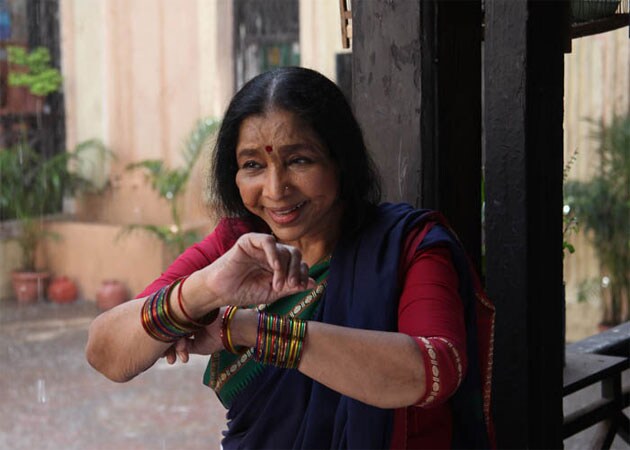

A voice like hers comes along once. We were lucky it came along in our lifetime.
Also Read: The Biggest Moments for Indian Cinema at Cannes 2025 That Had Everyone Talking
Follow us for more : Dis_cultured